
Background and current use
Leishmaniasis caused by Leishmania parasites and transmitted through the bite of sand flies affects humans and animals (mainly dogs) in the Mediterranean basin. Climate change has created new ecological niches favourable to the establishment of invasive vector species, including sand flies. Field evidence shows that the geographical distribution of sand flies is changing. Areas where sand flies were previously absent are now found to possess populations of sand flies. These new habitable environments are of particular concern if they can host human- and animal-disease-transmitting sand fly species. There is also a risk that habitats already suitable for sand fly vectors could support higher densities of vector species, or changes in the transmissibility or infectiousness of the pathogens could occur. These types of changes have been observed in other parts of the world and we should expect similar processes in Europe. To help understand these risks and devise appropriate mitigating plans, the CLIMOS (Climate Monitoring and Decision Support Framework for Sand Fly-Borne diseases Detection and Mitigation) project aims to develop novel approaches to improve sand fly monitoring by improving trapping and remote reporting of sand fly trap catches. The monitoring system combines novel attractive odours with sticky traps. Sticky traps are widely used for monitoring agricultural insect pests, particularly in high-value protected crops, and are also used, though much less systematically, as an experimental tool to investigate sand fly distribution and ecology.
Monitoring of sand flies is limited to the adult stage because larvae, nymphs, and eggs are very difficult to detect in their natural environments. For adults two major trap categories are used: attractive traps (e.g., CDC light traps) and passive traps (e.g., sticky traps). These can provide information on important questions such as which species of sand fly are present in a location, their numbers, and seasonal activity. In the CLIMOS project, we used CDC light traps to determine the attractiveness of formulated synthetic odours and for other experimental purposes but we also developed a prototype sticky board (trap) based on agricultural traps, that could be combined with the odour attractant and which would fit into a remote sensing and reporting monitoring trap.
The purpose of this opinion piece is therefore to describe the general state of use of sticky traps used in sand fly monitoring, the advantages and disadvantages of using them, and how they might be improved and to provide a comparison with using CDC traps.
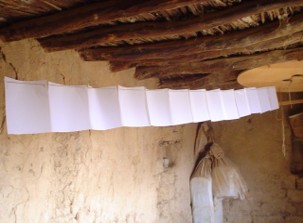
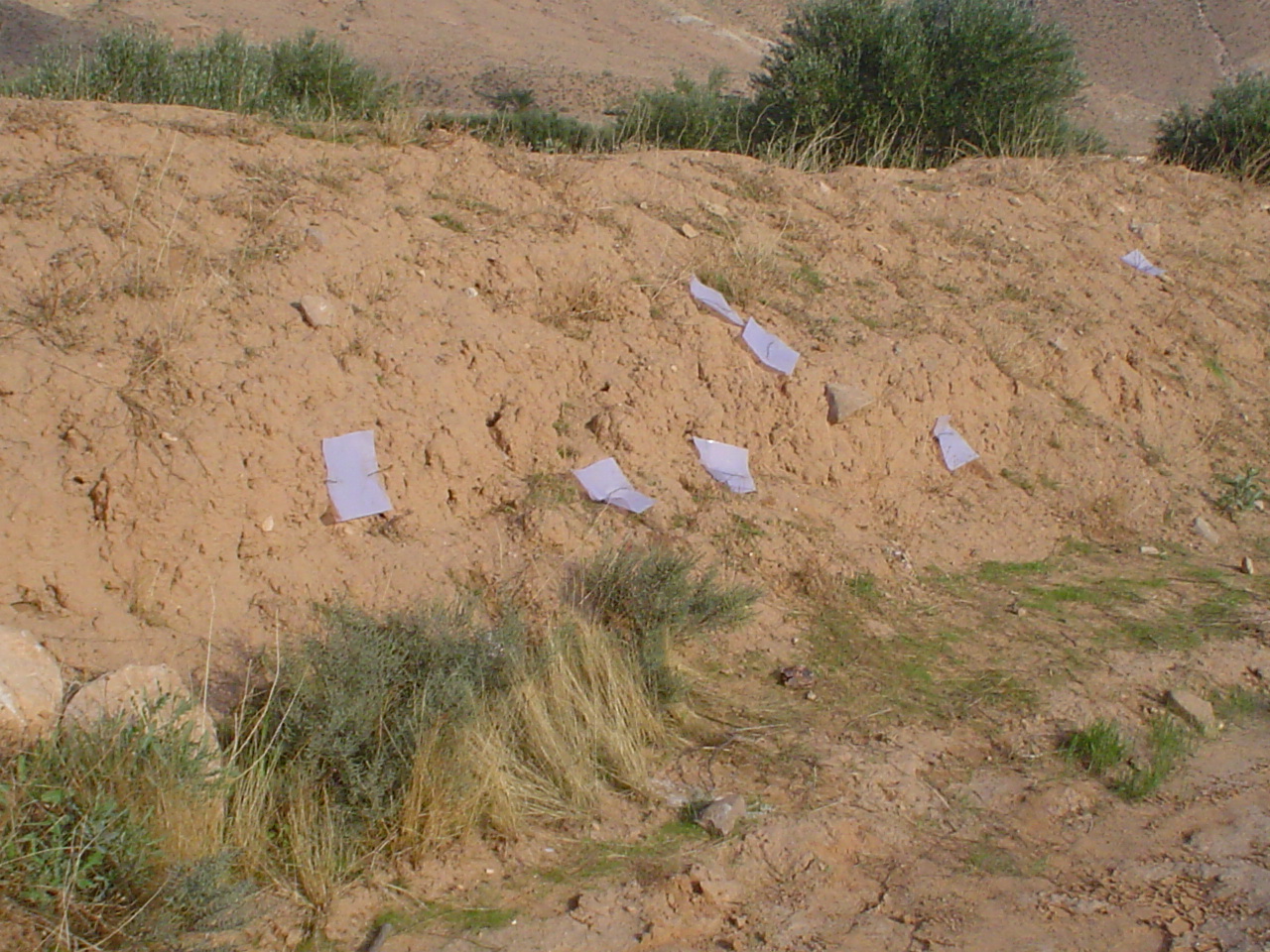
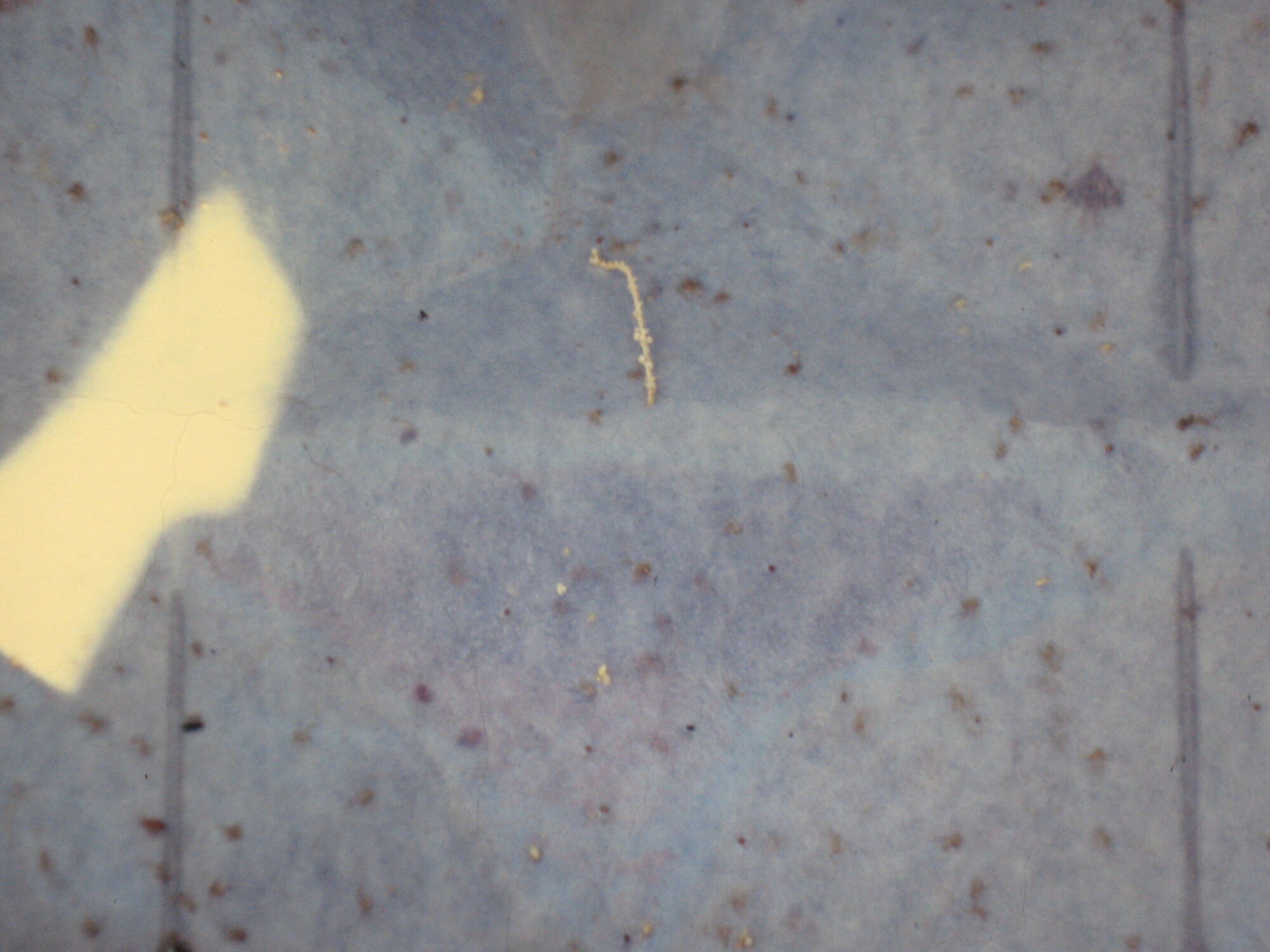
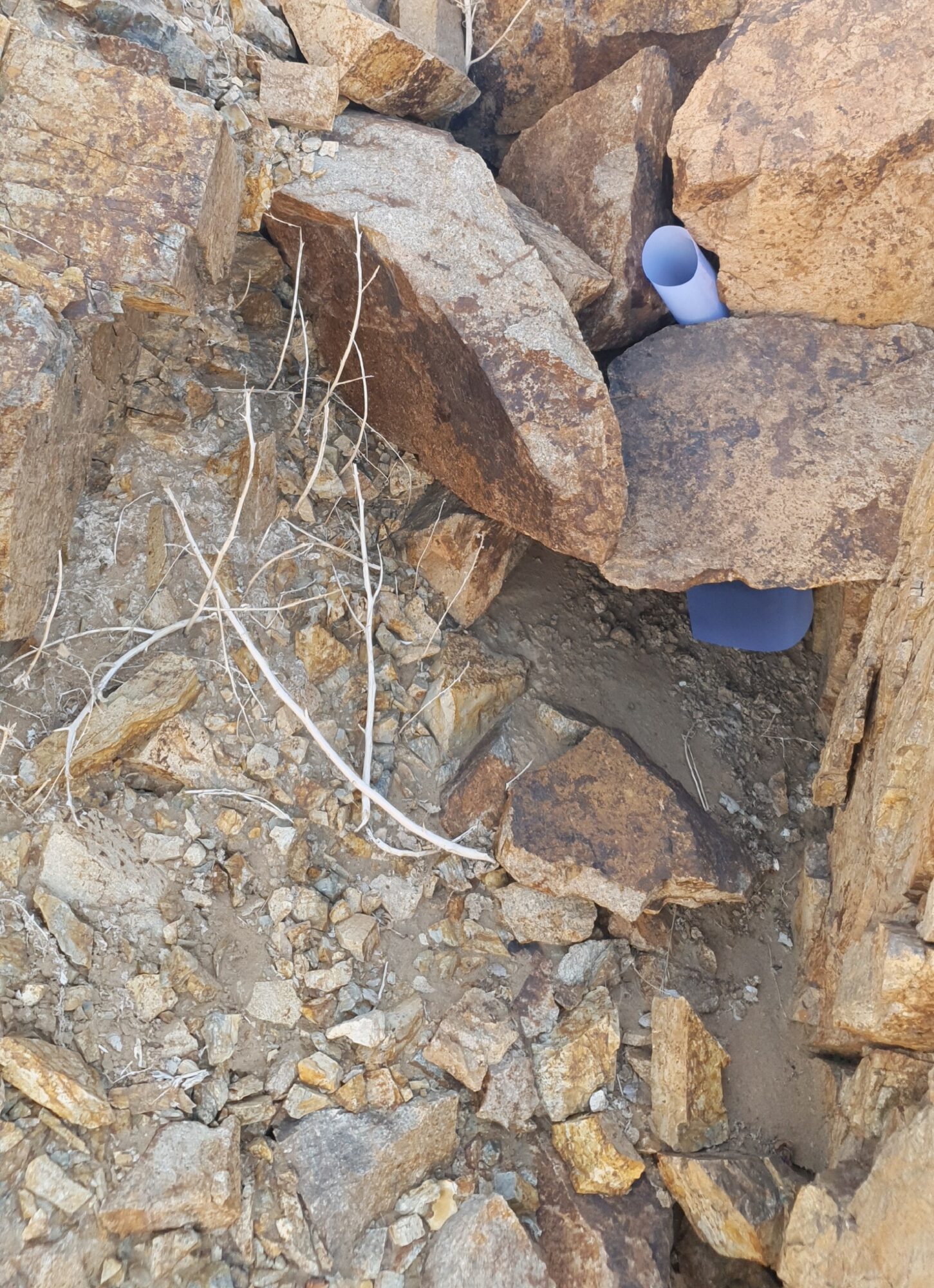
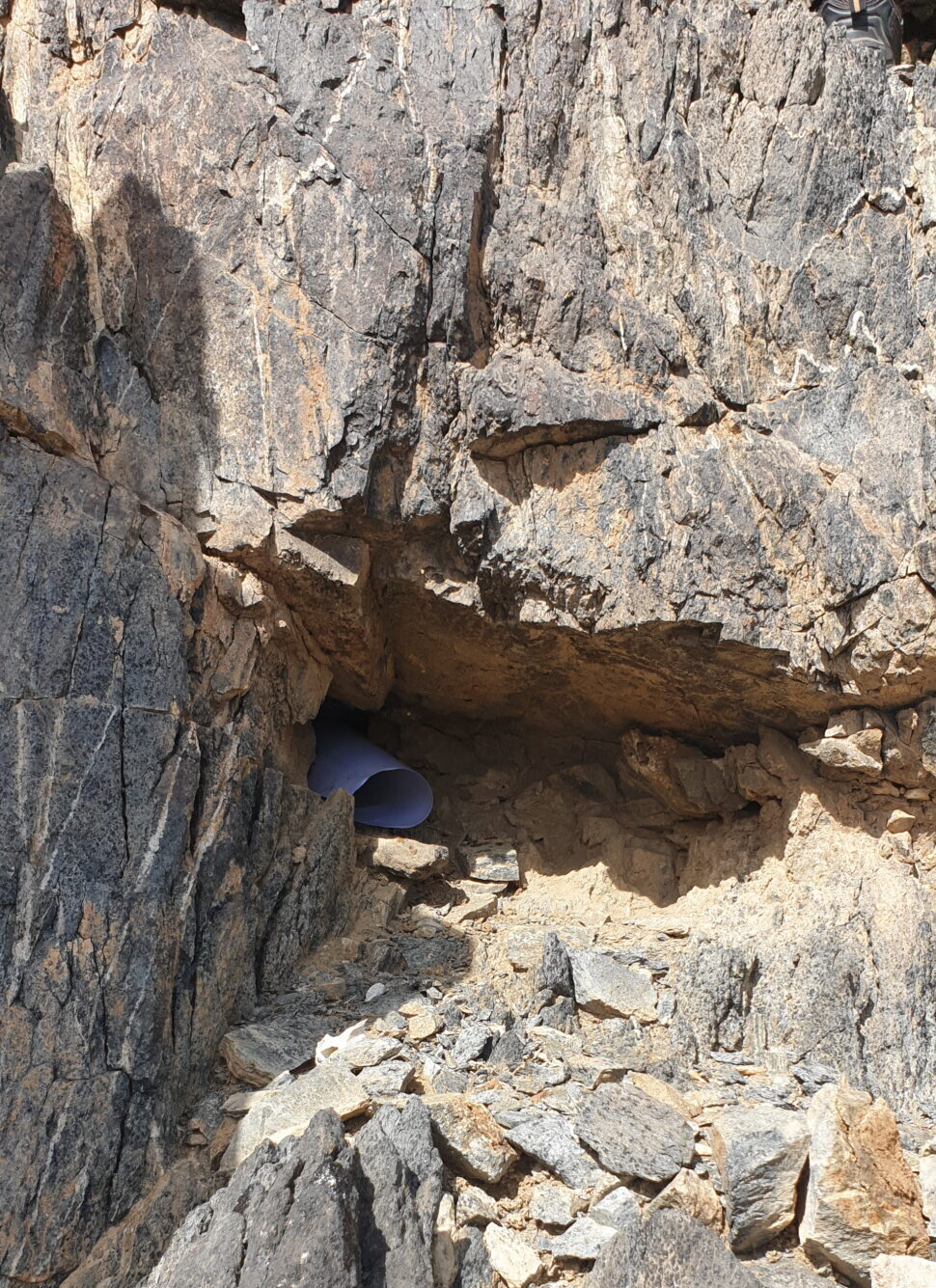
Sticky traps are typically made from white paper impregnated with castor oil (for 2-3 days) to become transparent and sticky. They can be used to determine sand fly population density; 13 pieces of paper (each 20×20 cm; total surface area = 1m2) are attached to a cord and spaced evenly 2 m above the ground. The papers are placed for two to three consecutive nights every week during the sand fly season (Figure 1). Alternatively, to determine the presence of active sand fly breeding sites, sticky papers are placed individually in an open format or rolled up at the entry of rodent burrows or rock crevices (Figure 2). A significant advantage of using Castor Oil is that sand flies can be easily removed from sticky traps with a paintbrush (Figure 3). It is important that sand flies can be removed intact from the trap so that they can be identified to the species level. By comparison, CDC traps have a rapidly rotating fan that may damage the sand fly as it enters the trap or the sand fly becomes dehydrated and dies as air is passed over it through the night. Dehydrated sand flies are difficult to identify to species level. By comparison, if the sand flies are removed from sticky traps quickly, they are generally in good condition for further microscopic and pathogen examination.
Arguments in favour of sticky traps for sand fly monitoring
A major advantage of using sticky traps is that they are easy to prepare and low-cost. Castor oil, for example, is odourless, readily available worldwide and has sufficient viscosity to entrap sand flies without damaging them when they are removed. Other oils, e.g. sesame oil, can be used if Castor oil is not available (El Naiem et al., 2020). Sticky traps are environmentally friendly; non-toxic, biodegradable and have a limited impact on non-target species such as pollinators. Because sticky traps are passive, they are not selective for species that may respond differently to different wavelengths of light or concentrations of CO2, and therefore provide more realistic information about the sand fly species composition in a given area, and density, both of which are more appropriate measures of biodiversity. They do not rely on a power source, which is useful when field sites are remote from laboratories, and they are quiet, so they can be set up within houses at night. Other types of passive traps e.g. Shannon traps are available, but sticky traps are more effective (Arzamani et al., 2019).
CDC light traps are attractive only to those sand fly species that are attracted to light. So, some sections of the total sand fly fauna are overrepresented in the catch, while others are underrepresented, thus presenting a skewed view of the species present in an environment. Light traps can also collect large numbers of specimens; these must then be identified, a process that can be extremely time-consuming. CDC light traps are noisy, and their light is irritating to householders at night, limiting their acceptance within domestic settings. CDC traps are relatively complex; they have a fan, light and associated power source so they frequently fail during operation. They also vary in some of their basic functions; fan rotation speed, light wavelength and intensity, and electromagnetic radiation. They can also vary in reflected colour and intensity, extent of handling by human technicians and placement, all of which could contribute to differences in trap efficiency but are rarely considered.
Criticisms and concerns
The use of sticky traps is also not without concern; for example, there is no settled opinion on how they should be prepared, and they are often prepared pragmatically, depending on available resources (e.g., paper, oil quality) and local practice (e.g., length of paper soaking time). All of these factors might influence catches; for example, papers will have been manufactured differently in different countries, will be of different thickness, will contain different amounts of whitener, will absorb and reflect light differently, and will absorb oil differently, all of which might combine to affect trap catches.
A major drawback is exposure to dust. Because the traps are exposed in the environment, they can easily become contaminated with sand and dust, reducing their adhesiveness for sand flies and therefore usefulness. This occurs predominantly when they are used outside and consequently, they need to be replaced every night. Unless they are firmly secured, sticky traps can be easily removed by wind, particularly when placed outside.
There is also some evidence that different-coloured paper attracts different species.
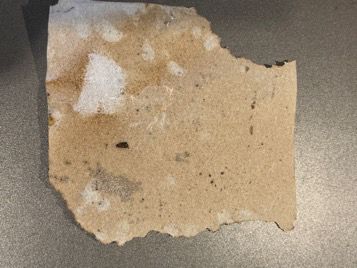
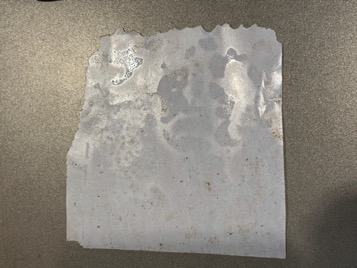
Perhaps a less obvious drawback of using Caster oil sticky traps is that they become appetising to rodents. Therefore, traps placed in the entrance to burrows (Fig. 4) may be eaten (Fig. 5. In addition, if the rodent is actively using the entrance, they may accidentally or deliberately dislodge the trap as they go in and out of the burrow.
Improvements
Sticky-trap efficiency needs to be improved. Addressing some of the standardisation issues mentioned above to improve manufacturing may help. But also the approach to using traps should be more nuanced, for example, there is evidence that the orientation of traps (vertical or horizontal) and height off the ground affects trap catches both in terms of species and quantities. (Müller et al., 2015; Elnaiem et al., 2020; Yousefi et al., 2025). To fine-tune sand fly collection by sticky traps, studies are needed to adjust their height and orientation, as they may differ according to sand fly species. Furthermore, the placement of traps should reflect at least what is known about sand fly behaviour and distribution in the environment within and around dwellings, animal shelters, or rodent burrows, and this is where the experience and advice of medical entomologists would be most helpful.
An interesting area for improving sticky trap design is the use of traps of different colours, which may provide a better generalist trap or a trap that is better targeted at specific species.
Conclusion.
Ultimately, there is no simple answer to which type of trap is best. Sticky traps are easier to mass-produce and cost considerably less. Sand flies captured can be used for taxonomic and pathogen-detection studies, and because they are passive, they do not distort population density or species structure calculations. Controlled manufacture and placement of this type of trap could standardise trapping across Europe in the same way that agricultural traps are utilised. However, their disadvantages include the fact that the position of the trap affects which species are trapped and the relatively short length of time that the trap can remain functioning (24-28h), which means that they would have to be replaced frequently. Therefore, their use would have to be carefully controlled with all users following the same set of instructions.
The application of light traps is affected by similar considerations: colour of the light, type of bulb, contamination from handling, position, and the damage they cause to non-target insect populations. However, it is mostly on issues of cost that their application would limit their application on a Europe-wide scale as they are expensive to purchase, operate, and maintain.
Download the full Opinion Article in this link
References
Arzamani, K., Rassi, Y., Vatandoost, H., Akhavan, A.A., Abai, M.R., Alavinia, M., Akbarzadeh, K., Mohebali, M., Rafizadeh, S., Karimian, F., Badakhshan, M., Absavaran, A. 2019. Comparative performance of different traps for collection of phlebotominae sand flies and estimation of biodiversity indices in three endemic leishmaniasis foci in north Khorasan province, northeast of Iran. J. Arthropod-Borne Dis. 13: 399–406
Elnaiem, D. E., Khogali, A., Alsharif, B., Dakein, O., Jibreel, T., Hassan, M., Edries, H. H., Elhadi,
H., Elnur, B., Osman, O. F., Boer, M. D., Alvar, J. & Khalid, N. M. 2020. Understanding sand
fly sampling methods: sticky traps are attraction-based and not interceptive sampling tools of
Phlebotomus orientalis. Parasites & Vectors, 13, 389. https://doi.org/10.1186/s13071-020-04249-1
Müller, G. C., Hogsette, J. A., Kline, D. L., Beier, J. C., Revay, E. E. & Xue, R. D. 2015. Response of the sand fly Phlebotomus papatasi to visual, physical and chemical attraction features in the field. Acta Trop, 141, 32-6.
Yousefi, S. , Paksa, A., Sanei–Dehkordi, A. , Azizi, K.,Abbasi, M., Shahabi, S., Gheibi, Z., Dabaghmanesh, S., Vahedi, M. ,Danaei, N. , Innovative Trap Approaches for Studying Phlebotomus papatasi: Emphasizing Color and Position, Acta Tropica (2025), doi: https://doi.org/10.1016/j.actatropica.2025.107727